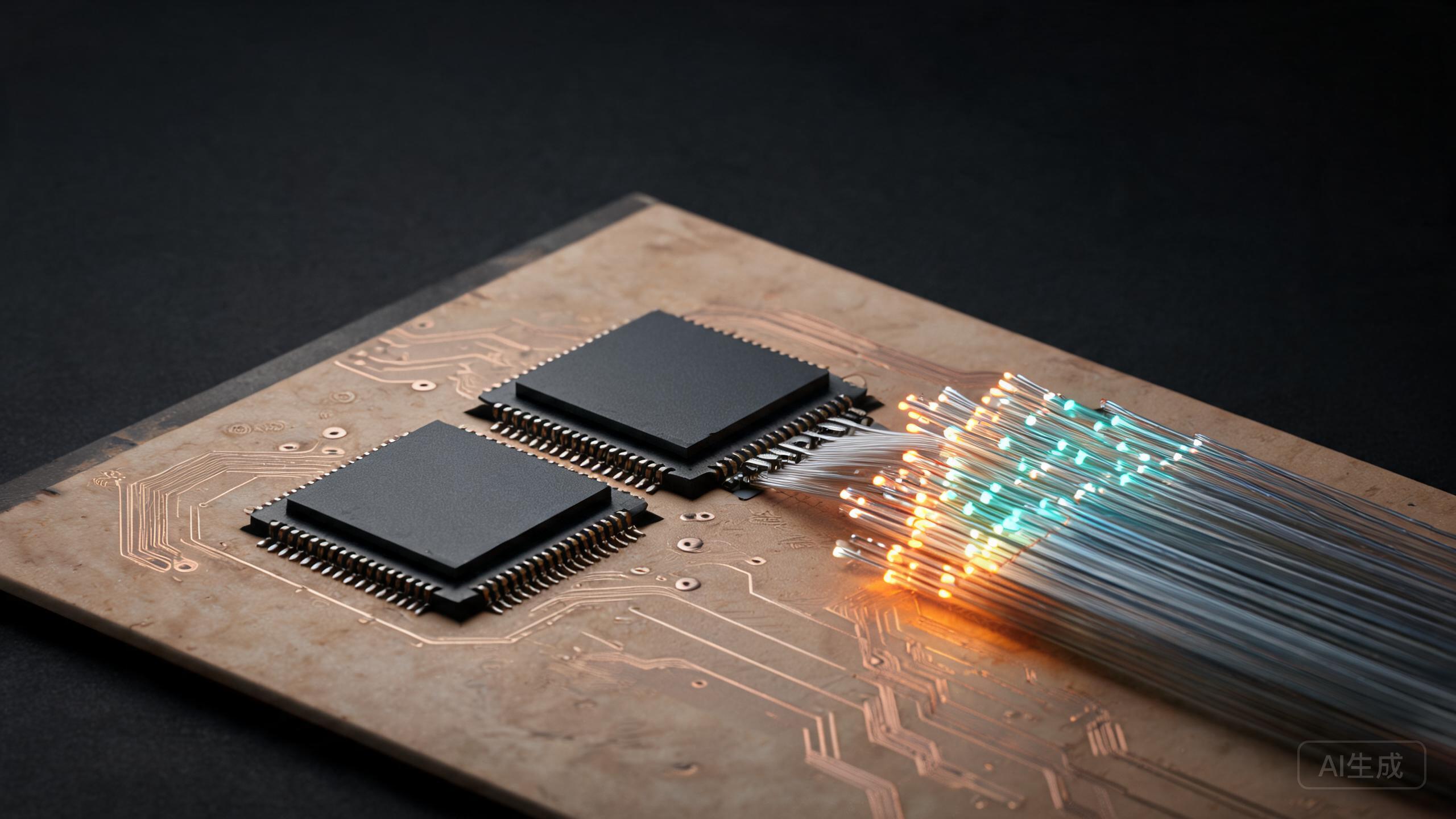
The semiconductor industry is entering an era in which the most important breakthroughs are often hidden inside the layers between a transistor and a finished system. This briefing examines what this development means, why it matters now, and which signals will determine its lasting value.
Broadcom has moved its third-generation co-packaged optics
Broadcom has moved its third-generation co-packaged optics platform into volume deployment, with hyperscale customers installing 102.4 terabit switches that use silicon photonics engines mounted directly beside the switch ASIC. The product, marketed as Davisson, is built on the Tomahawk 6 switch family and represents the first broad commercial use of CPO in AI back-end networks.
The argument for co-packaging is electrical reach
The argument for co-packaging is electrical reach. As lane rates rise to 200 gigabits per second, the trace loss between a switch die and a pluggable module becomes a dominant power and signal-integrity problem. Moving the optical engine into the same package shortens the high-speed electrical path, allowing the use of lower-power SerDes and eliminating much of the retiming circuitry that pluggables require. Broadcom claims a 30 to 40 percent reduction in optical interconnect power at the system level, with better link margin at long reach.
Broadcom: The design uses a 3
The design uses a 3.5D package that stacks the switch die and the photonic engine on a shared interposer, with fiber arrays attached at the package edge. Lasers remain external and are designed to be field replaceable, addressing the reliability concern that has slowed CPO adoption. Thermal management is the hardest engineering problem: the photonic engine must stay within a narrow temperature band while sitting next to a switch die dissipating hundreds of watts, so the package uses a dedicated cold plate and a thermal isolation structure between the two die.
Manufacturing is another constraint?
Manufacturing is another constraint. Silicon photonics engines require known-good optical testing at wafer and package level, and the fiber attach process must survive reflow and repeated thermal cycling. Broadcom has worked with TSMC's COUPE platform for the photonic integration and with fiber and connector suppliers to standardize the external interface. Capacity is still measured in tens of thousands of packages per quarter, not millions, which is enough for early hyperscale deployments but not for the entire data center switch market.
The longer-term implication is a
The longer-term implication is a restructuring of the optics supply chain. If CPO becomes the default for top-of-rack and back-end AI fabrics, pluggable module vendors will shift toward longer-reach and edge applications, while switch vendors capture more of the optical value. That transition will take years and will be uneven across operators, but the direction is now set: optics is moving from a removable accessory into a component of the switch package itself.